ProfTalk | Maria Polinsky: “Language Change Is a Sign That a Language Is Alive”



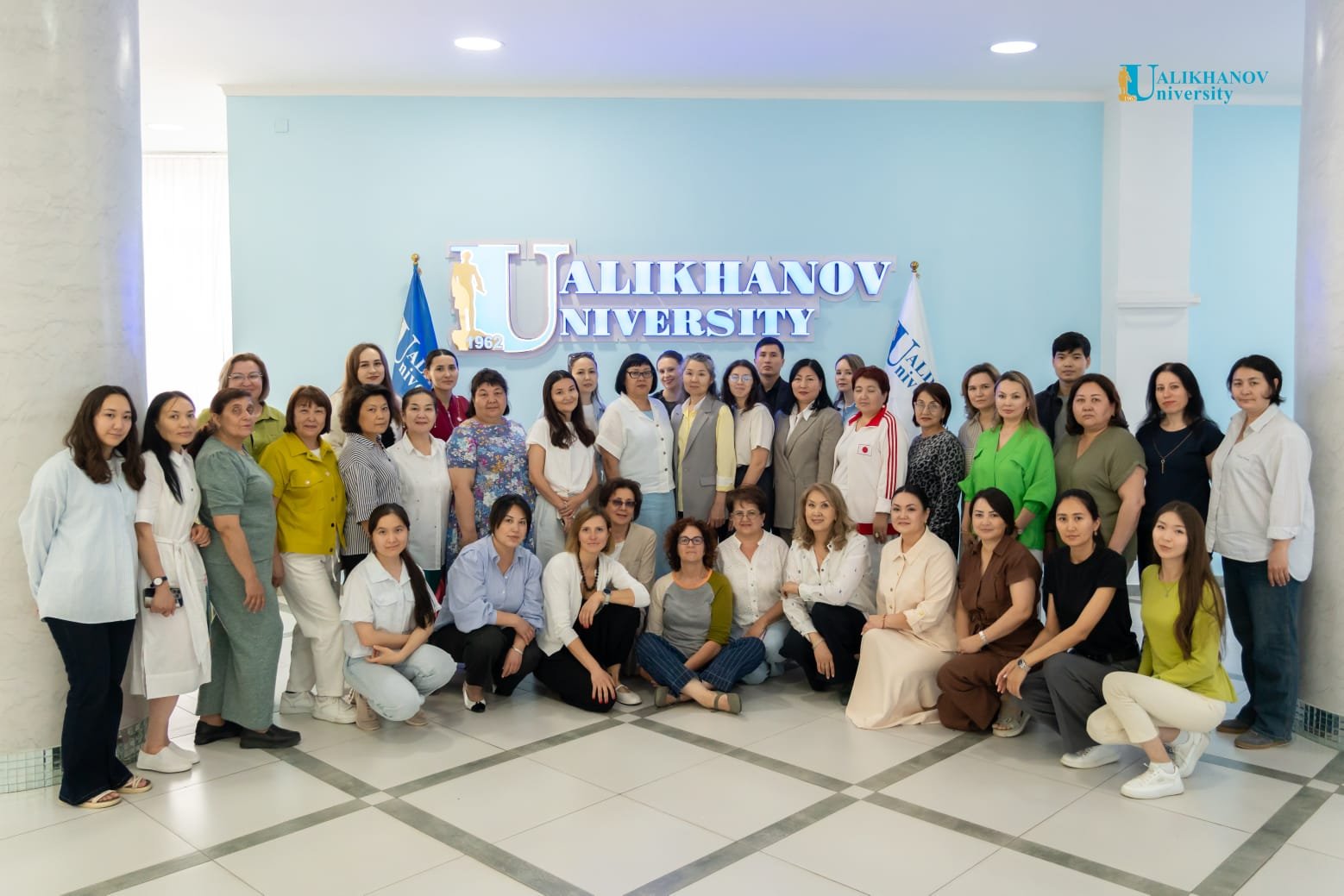
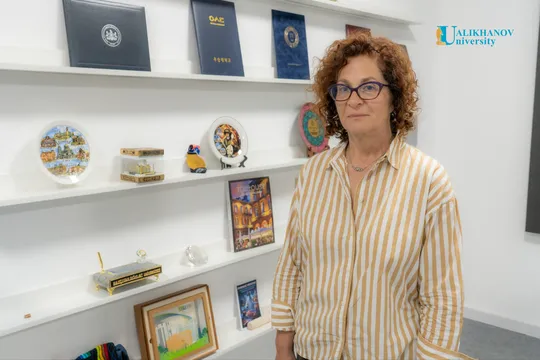

Maria Polinsky is a Professor of Linguistics at the University of Maryland (USA) and one of the world's leading scholars in bilingualism, heritage languages, and multilingualism. Her research focuses on language development, heritage language maintenance, code-switching, and the cognitive aspects of bilingualism. She is the author of numerous academic publications and international research projects.
During the International Summer School at Ualikhanov University, Professor Maria Polinsky shared her insights on heritage languages, linguistic intuition, multilingualism, and the contemporary challenges of preserving linguistic diversity around the world.
Kazakhstan is a country where many people grow up in a bilingual environment, speaking both Kazakh and Russian from an early age, while an increasing number of young people are also learning English. What makes this linguistic experience unique?
First of all, Kazakh and Russian are typologically very different languages. They belong to different language families and have fundamentally different grammatical structures. When people are equally proficient in both languages, we often observe them naturally mixing the two in everyday speech. Because these languages are so different, this phenomenon provides an especially valuable opportunity for linguistic research. We refer to it as code-switching.
For many years, mixing languages in conversation was considered something undesirable. Today, however, we understand that it is actually a hallmark of healthy bilingualism. It means that both linguistic systems are active simultaneously, allowing speakers to instantly retrieve the word they need from either language.
Most existing research on code-switching focuses on closely related language pairs, such as English and Spanish or Spanish and Catalan. Since these languages share many structural similarities, their interaction has already been extensively studied.Kazakh and Russian, by contrast, belong to different language families and differ significantly in their structure. That is precisely what makes their interaction particularly valuable for linguistic research and offers unique opportunities to better understand how bilingual minds work.
Your research focuses on heritage languages. Why is it so important to preserve a language that is passed down through generations within a family?
Every language is an incredibly complex system. Preserving any language matters because language is a gateway to culture and a window into a people's worldview and collective identity. When a language disappears, we risk losing ethnographic knowledge, folklore, traditional songs, and many other elements of cultural heritage. When a language continues to be spoken and passed on, it remains alive and continues to develop naturally.
Heritage languages also play an important social role. They are often the primary language of older generations, who may not speak the dominant language of the wider society fluently. When their children and grandchildren also speak the heritage language, it strengthens intergenerational continuity and fosters meaningful communication between different generations. That continuity is invaluable.
Many people worry that languages change over time and eventually lose their "pure" form. Should we be concerned about that?
Every language changes. Modern Kazakh is different from the Kazakh spoken one or two hundred years ago. The same is true of Russian, English, and virtually every other language in the world.The future of any language is shaped by the younger generations who speak it. In reality, the choice is quite simple: either we have a modern Kazakh language that continues to evolve, or we risk not having it at all. The most important thing is that people continue speaking their language.Language change is a sign that a language is alive. As a linguist, I always say that we should not fear linguistic change or try to resist it. Whether we like it or not, languages will continue to evolve.
What are the benefits of preserving a family's heritage language?
That depends on the language itself. First of all, it is the language of the family. It helps preserve connections between generations, enables meaningful communication with relatives, and strengthens a person's sense of belonging to a particular culture and community.
Secondly, Kazakh can be seen as a gateway to the Turkic-speaking world. People who speak Kazakh generally find it much easier to learn Turkish and other related languages. It also creates broader opportunities for communication and collaboration with speakers of other Turkic languages.
For example, knowledge of Kazakh can be particularly valuable when working in regions where it is widely used in everyday life, as well as in professional and cultural cooperation with other Turkic-speaking countries.More broadly, a family's heritage language is something a person can take pride in. It is an important part of their identity.
Your research suggests that people can retain linguistic intuition even if they have only limited proficiency in a language. How does modern linguistics explain this phenomenon?
Linguistic intuition begins to develop very early in childhood - even before a child starts speaking. It is extremely difficult to develop this kind of intuition if a language is learned only after the age of five or seven. It is a characteristic of people who were exposed to or spoke that language from early childhood. Even when a heritage language is not a person's dominant language, linguistic intuition allows them to think in that language while simultaneously comparing it with their dominant one.
Take Kazakh-Russian bilinguals, for example. Their brains are constantly comparing how the two languages are structured. They readily notice the differences between them and often understand those differences intuitively, even if they cannot explain them in terms of formal grammatical rules.That intuitive understanding enables people to gain a much deeper sense of how a language works. This is precisely the value of linguistic intuition, and it is something that is very difficult to develop later in life
.Even highly proficient speakers may hesitate when they encounter unfamiliar sentence structures or expressions they have never heard before. Early exposure to a language, however, allows this intuition to develop naturally.
Another important advantage of linguistic intuition is that it expands our cognitive capacity. It enables us to compare a wider range of linguistic and cognitive patterns, fostering greater cognitive flexibility and more adaptable ways of thinking.
Can someone who heard a heritage language in childhood but rarely speaks it today regain proficiency later in life?
Yes - provided that the language was part of their early childhood. By definition, a heritage language is one that a person was exposed to from a young age.
If someone simply has Kazakh ancestry but grew up, for example, in Moscow and never heard Kazakh spoken at home, learning Kazakh as an adult would be no different from learning it as any other Russian-speaking adult starting from scratch.
The situation is quite different for someone who grew up in a Kazakh-speaking family, or even if just one family member regularly spoke Kazakh. Even if that person did not actively speak the language as a child, early exposure gives them a foundation that can later help them successfully regain proficiency.This is actually a fairly common phenomenon today. Many people who heard the language from their grandparents during childhood decide to study it more consciously as adults. These learners have clear advantages. Their pronunciation is typically much more natural, and overall they tend to sound far more authentic than people who begin learning the language in adulthood without any early exposure.
What is the greatest challenge facing heritage language preservation today, and what strategies truly help younger generations maintain a connection with their linguistic heritage?
I believe the greatest challenge is the economic and social status of each individual language. If a heritage language has practical value in everyday life or professional settings, people are much more motivated to preserve it. If, however, it is associated only with memories of the past and has little relevance in contemporary society, it is likely to gradually disappear.
The strongest motivation always comes from the language community itself - from the people who speak the language and the society in which it has traditionally been used. When politicians, linguists, or sociologists come from outside and tell people, "You should learn your language", it rarely produces meaningful results. If there is no genuine interest within the community, preserving the language becomes extremely difficult.In my experience, heritage languages thrive only when their own speakers genuinely want to maintain them. The reasons vary. Sometimes they are economic; in other cases, they are rooted in cultural or social developments.
For example, in parts of Asia and Central America, interest in heritage languages has been revived alongside efforts to preserve traditional ways of life and the natural environment. In other cases, national identity has become the driving force.
A good example is the Basque language. During the Franco regime, its use was heavily restricted. Once those restrictions were lifted, people themselves wanted to bring Basque back into everyday life. For several generations, the language survived mainly in rural communities. Later, people began reconnecting with their family roots, returning to the language of their grandparents, and learning it again. Modern Basque is certainly different from the language spoken by earlier generations, but metaphorically speaking, it rose from the ashes like a phoenix.
At the same time, we have to acknowledge that not every language can be preserved. From a scientific perspective, it is essential to document and record the languages that still exist today, because some of them may disappear in the near future.
Another major challenge is the lack of educational resources for heritage languages. Major languages benefit from textbooks, literature, and a wide range of teaching materials, whereas smaller languages often lack these resources. Developing them requires not only financial investment but also dedicated scholars, linguists, writers, educators, and other specialists willing to contribute their expertise.Ultimately, however, the decisive factor remains the same: the initiative must come from the language community itself. A genuine desire from within the community is the most important condition for a language's preservation and continued development.
If you were to launch a new international research project in Kazakhstan, which aspects of our multilingual environment would you find most compelling from a scientific perspective?
I would highlight two areas. The first is the study of Kazakhstan's linguistic diversity and the ways Kazakh and Russian function across different regions of the country. Kazakhstan is of exceptional interest to linguists because of its multilingual environment and the wide variety of language practices found throughout the country.
The second area is the study of children's language development and the creation of a corpus of Kazakh child language. This is an extremely important undertaking. Even if we cannot yet foresee all the ways such a corpus might be used in the future, it would become an invaluable resource for generations of researchers.Building a corpus is a long-term and highly demanding process. It involves recording children's speech, transcribing the recordings, digitizing the data, and carefully annotating every sample. I know that researchers are already engaged in this work - collecting children's speech, processing the data, and gradually building a scientific resource that will support future research.Such corpora enable researchers to study how children acquire language at different stages of development. Comparable resources already exist for English, French, Russian, and Spanish, and they have become indispensable tools in linguistic research.Creating a similar corpus for Kazakh would be a significant contribution to international linguistics. At present, our knowledge of how children acquire Turkic languages remains limited. Developing a corpus of Kazakh child language would therefore open up entirely new opportunities for research and substantially advance our understanding of language acquisition in the Turkic language family.