Ualikhanov University Students Develop AI-Powered Crop Yield Forecasting Platform
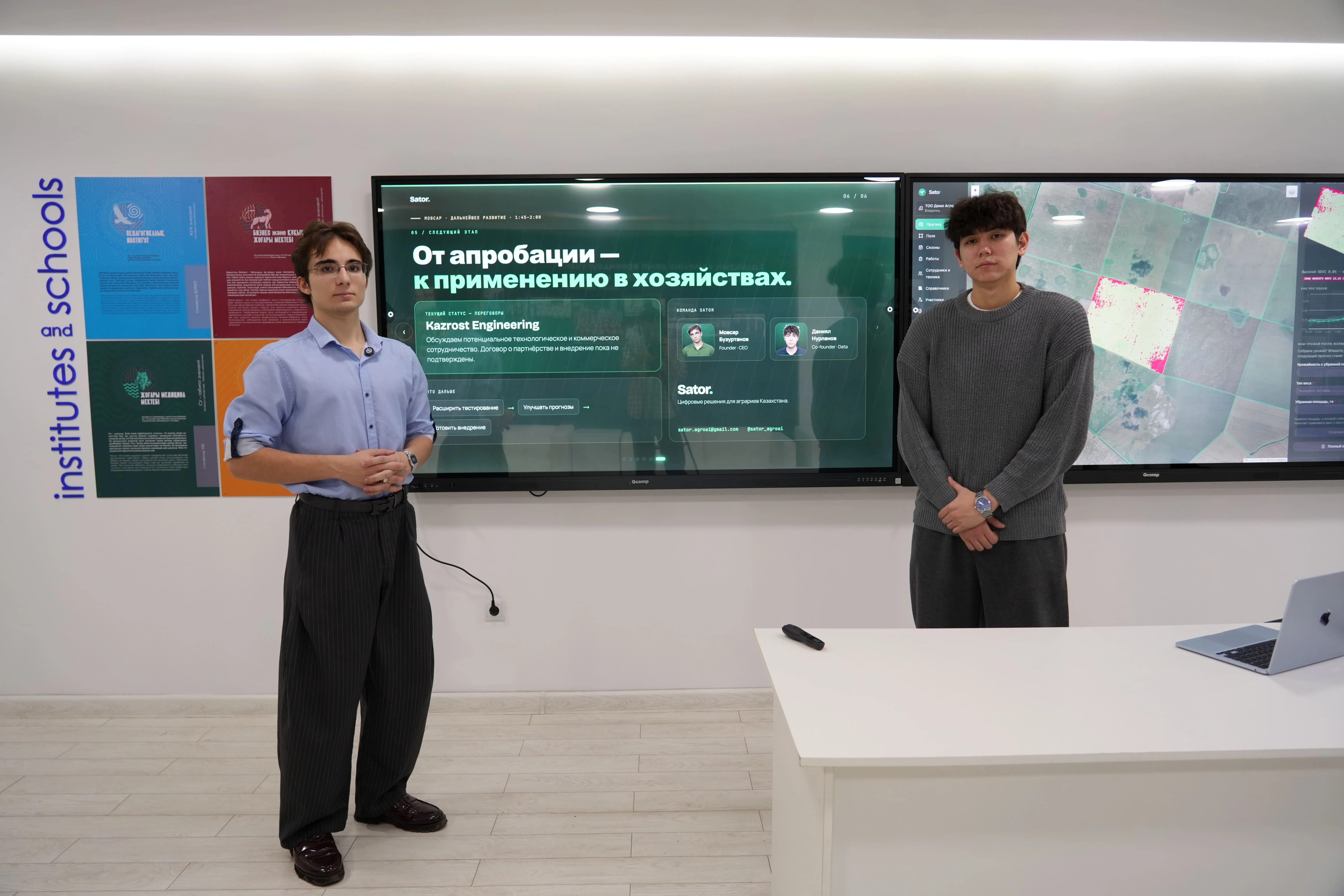
Third-year Data Science students at Ualikhanov University, Movsar Buzurtanov and Daniyal Nurlanov, have developed Sator, an AI-powered startup platform designed to help farmers monitor crop conditions and forecast agricultural yields.
The project won first place at National Founder Cup Astana 2026, held on October 31 at Nazarbayev University. Competing against 15 other teams, the students earned recognition from the judges for their practical approach and the potential of their technology to address challenges in the agricultural sector.
The startup's journey began through the AI-SANA program. In May 2026, Buzurtanov and Nurlanov entered an AI project competition hosted by Ualikhanov University as part of the national AI-SANA initiative. Their project, originally called AgroMind, won first place and received KZT 1.5 million in prize funding to support its further development. The students subsequently refined their technology and continued developing the platform under its new name, Sator.
Sator combines satellite monitoring data, weather information, soil characteristics, and historical crop yield records. Using artificial intelligence and machine learning, the platform analyzes these datasets to generate crop yield forecasts, providing agricultural producers with insights to support production planning and informed decision-making.
The project has particular relevance to Kazakhstan's agricultural sector, where digital technologies and AI offer opportunities to improve productivity, optimize land use, and strengthen crop forecasting capabilities. Such solutions are especially valuable in major agricultural regions, including Akmola, where farming plays a significant role in the regional economy. Sator represents a locally developed technological solution aimed at supporting the digital transformation of Kazakhstan's agricultural industry.
The team has already tested the platform using data from 178 agricultural fields. The developers are also in discussions with agricultural companies in Kazakhstan regarding potential partnerships and opportunities to introduce the technology into farming operations.
The next stage will focus on testing Sator under real-world agricultural conditions. In 2027, the students plan to collaborate with agricultural enterprises to validate the accuracy of their forecasts, further improve the machine learning algorithms, and prepare the platform for market entry.